2017-10-02 Spain – Roman and Moorish sites Piedrahita to Segovia
Previous Day :: Trek Overview :: Next Day
Spain – Roman and Moorish sites Piedrahita to Segovia
Roman and Moorish Sites in Spain by Hymer Motorhome
Plasencia to Piedrahita
I wake early (about 5.00am), it is cold and I have to get up and close the roof windows in the camper and pull the duvet over us. Later, we wake for coffee at 7.00am, the temperature has fallen to 13°C (20° cooler than yesterday), no wonder it feels ‘cold’.
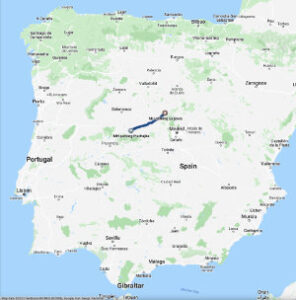
We breakfast, service the Hymer (fill with water and empty the grey and toilet cassette) and fill up with another €50 of diesel at €1.06/L. We leave Piedrahita around 10.00am, and take the N-110 through Avila to Segovia, it takes us about two hours to drive the 130km. Along the route we see many raptors: red kite, hen harriers, buzzards sitting on tall pylons, and black vultures flying. We decide the birds are flying south for the migrations, it is frustrating not to be able to stop and look at the raptors properly, but there’s no time, and, we know that as soon as you stop they fly away.
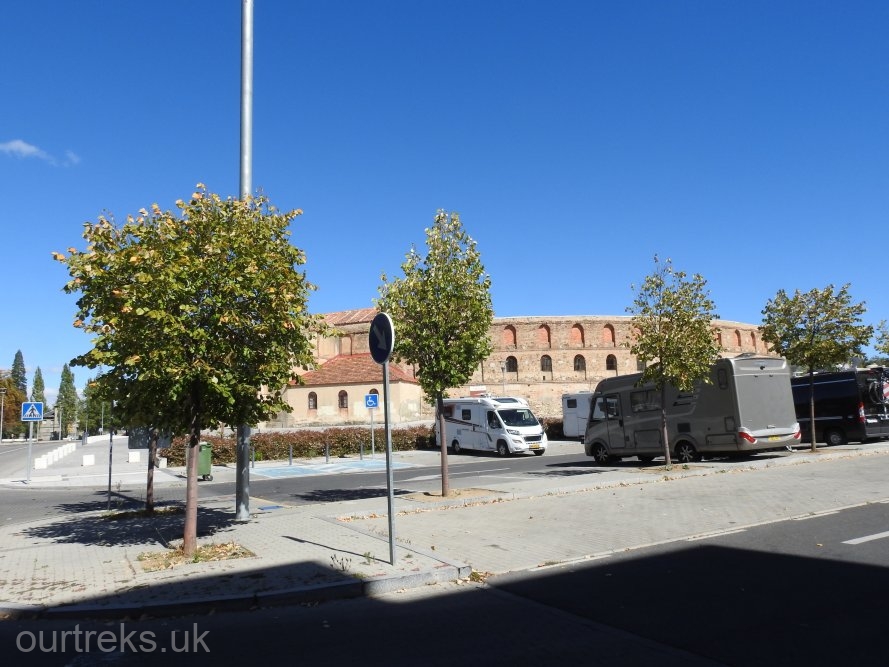
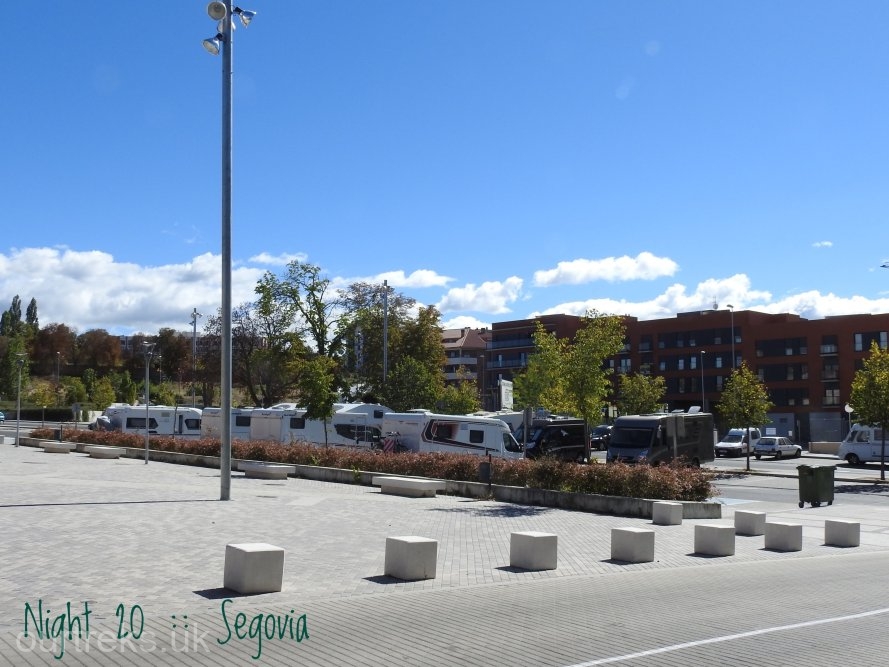
We cross the flat yellow plain with fields of cork oaks and cattle and climb to 1386m at Puerto de Villatoro in the Sierra de Gredos mountains. As we move north there are signs of the early autumn, poplar trees turning yellow and the harvest completed. The terrain has completely changed from dry arid areas with nothing but olive trees, through areas of cork oak to a much more agricultural area with cattle and sheep. We arrive at Segovia around midday and park on the autocaravanas park in Plaza de Toros de Segovia (the Coliseum or bullring), very near to the Roman aqueduct and old town. There are 16 spaces and already there are motorhomes in seven of them, from the Netherlands, France, Spain and us from GB.
Although we refers to these overnight camping areas as aires, that is the French word which has taken an international usage. In Spain the motorhome areas are Areas de Servicios de Autocaravanas, or ASACs, somehow it doesn’t sound quite right, but that’s how we should be referring to them.
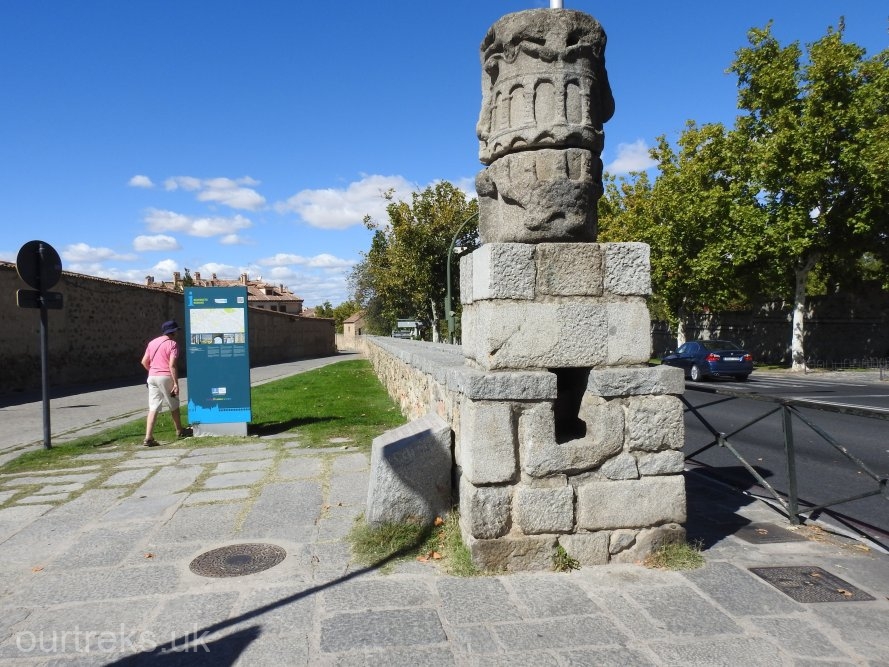
There isn’t much shade but we park in a space that is next to a small tree, so we have plenty of room behind to back over the pavement (this turns out to be important later). We have lunch and walk about 10 minutes downhill towards the town until we meet the point where the aqueduct channel starts. It is marked by a large stone monument and the stone channel signifies the route the water takes to the old town.
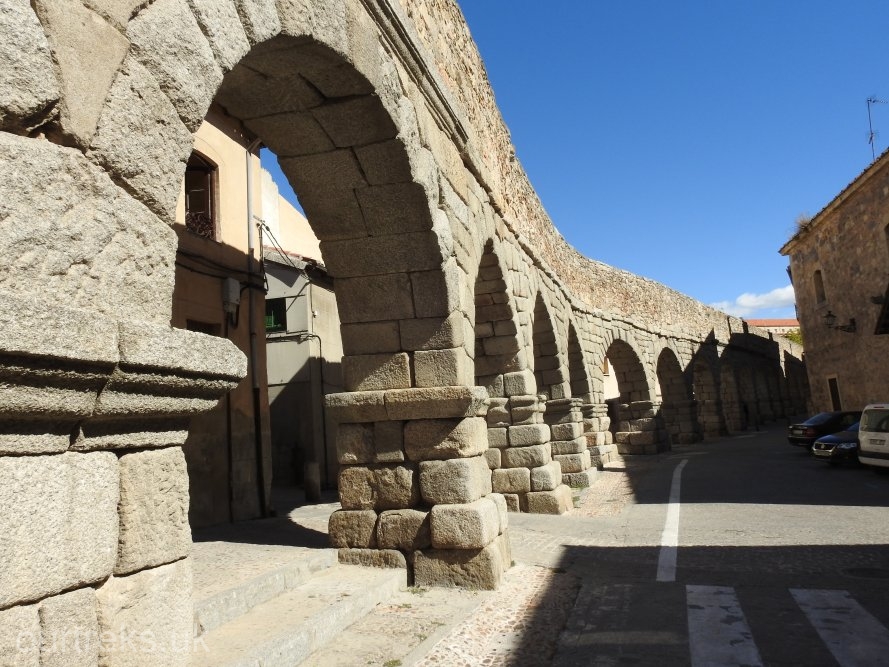
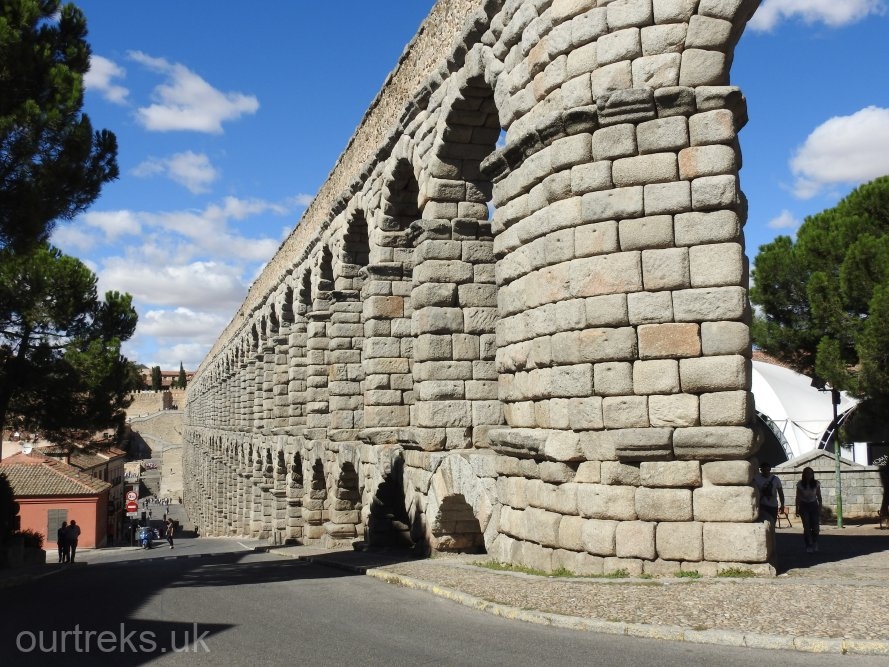
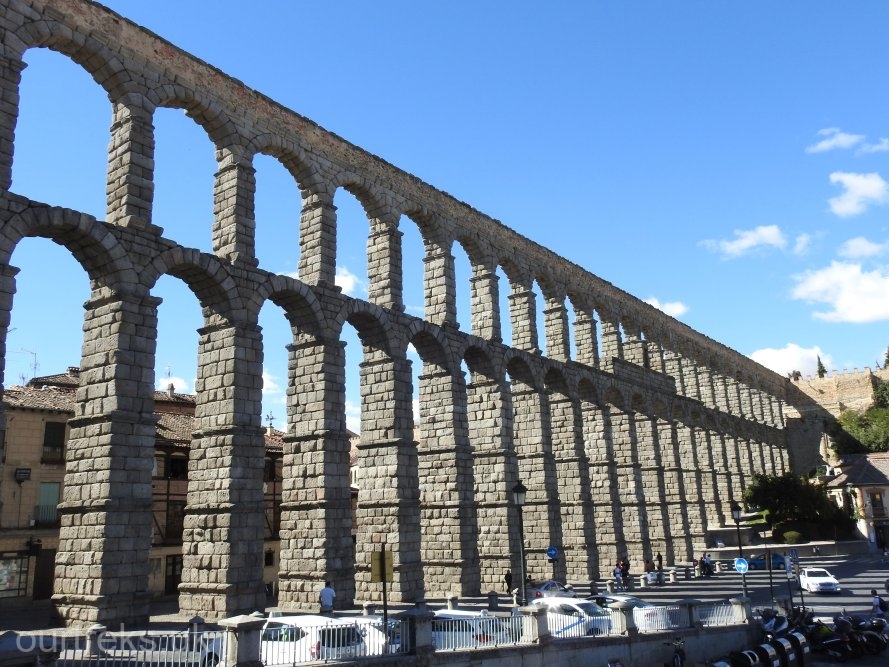
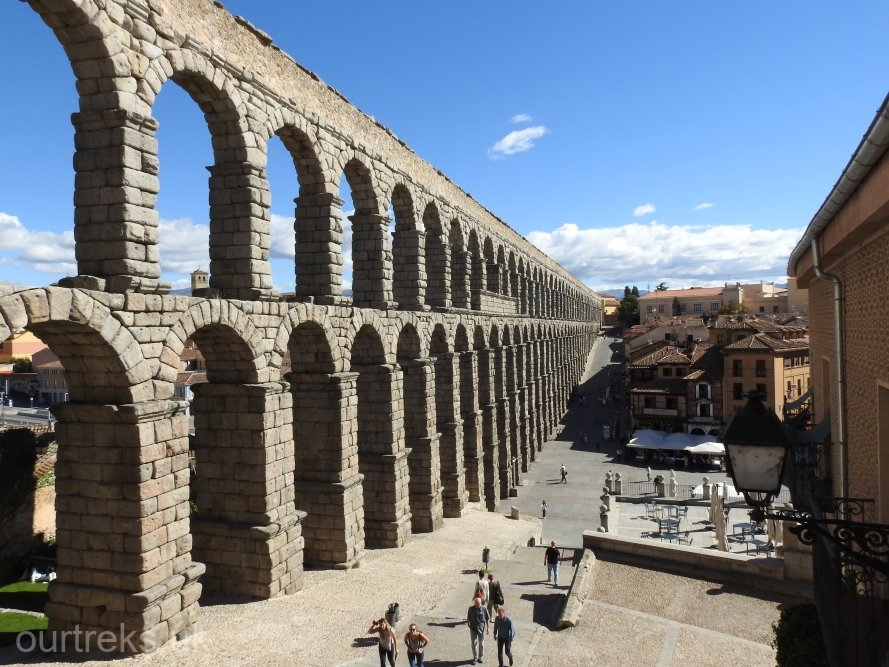
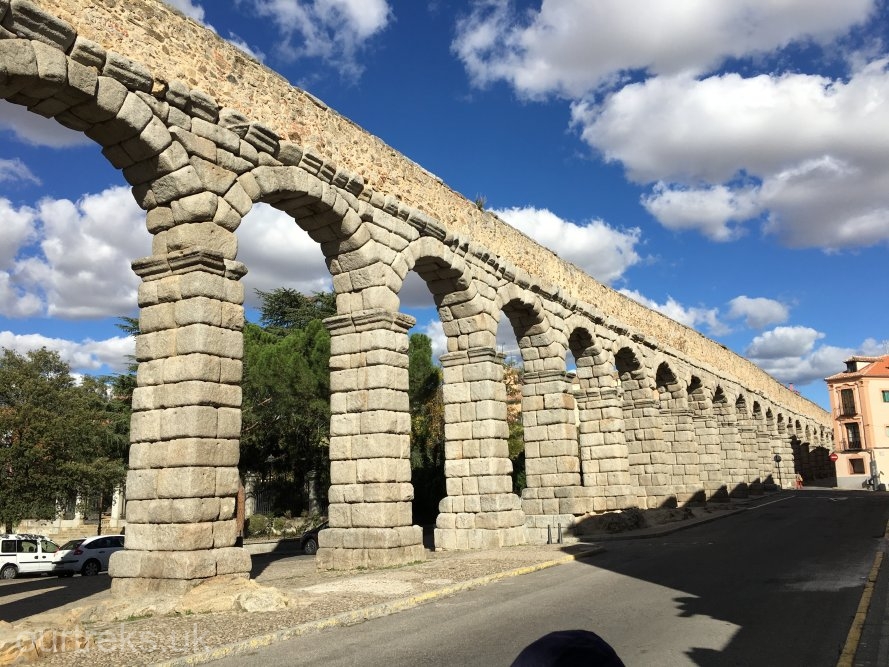
The stone water channel is set on top of a wall about a meter high to begin with. As the road slopes downwards into the town, the wall rises, keeping the water channel level and steadily carrying the water channel higher and higher. As we walk alongside it, the tall wall rises to about 3m high. It enters the water house where it passes through a fine filter to remove any debris. As the stone channel of water leaves here, the tall wall is replaced by short pillars that continue support the stone channel and keep it level higher and higher above the town. The short pillars become tall pillars and, as the ground continues to fall downhill, the pillars become as high as a house. At the end of the road the channel makes a sudden 90-degree turn and, in a spectacular span of arches, crosses the plaza of the town beneath it and enters into the old town through the old city walls.
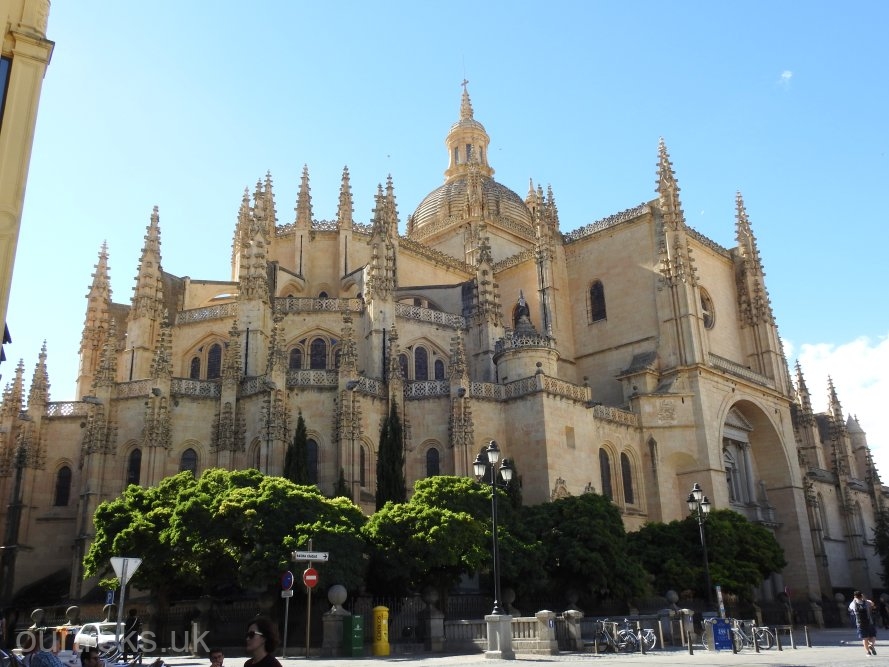
The aqueduct at Segovia is truly magnificent. In the bold sunlight, it casts zebra stripe shadows across the road where the traffic is passing. It is 28m high at its tallest point and 3m wide. It is one of the best preserved Roman aqueducts in the world. We stop at the old town where the aqueduct channel enters through the wall, what a piece of engineering, 2,000 years old and it is still standing, mostly it is the top layer of the channel that has been restored, but the pillars look mostly as they might have in Roman times. We wander around the old town and enjoy the narrow streets, cathedrals and plazas. Looking back at the photos reminds us what a good experience we had in Segovia.
We decide not to walk to the Alcazar as it is about another mile further on and is hot again (about 30°C), so return to the camper. Another two campers have arrived and we watch our fellow travellers as we drink Cava and eat tea. Alan collects conkers from under the chestnut trees close the the aire ASAC, they have an irresistible quality. We have had a long day so go to bed about 9.30pm. As I am settling to sleep sometime after 10.00pm, I hear at least another three campers arrive and I hear them park up quite near to us. I am drifting off to sleep when I hear a loud bang and what sounds like much cursing in Spanish! I think something has hit us. I wake Mr C. and he says he doesn’t think so, just a late arrival camper next to us has hit something very hard. I think of the tree at the end of the next space. I go to the bathroom and peer out of the window. Yes! Sure enough, there is a camper parked within an inch if the tree. I can’t see any damage as it is too dark, so go back to bed and sleep until morning.
Our Hymer motorhome trip to Roman and Moorish Sites in Spain
Click any photo to enlarge