Spain and Portugal – Santiago de Compostela to Lagoa de Cospeito via Lugo
Previous day || Back to trip summary page ¦¦ Next day

Santiago de Compostela to Lagoa de Cospeito via Lugo
We are camped on the area de servicio para autocaravanas at Fonte Daiz, situated at a pre-school. In the morning, as we eat breakfast we watch the parents bring their small children (between about two and four years) to the nursery.
We service Hymer and move on through Touro on AC-240 to Os Penedos. Here we take N-547 which follows the Camino Santiago walking route through Arzúa and Melide where we see hundreds of pilgrims walking along the roadside with their backpacks and wooden staffs with water gourdes.
At O Coton we take A-54 a good road all the way to Lugo city. Crossing the Ponte Branca bridge over the Minho River (again) we climb a steep hill to an Area de Autocaravanas just below the city walls of Lugo. Unfortunately it is closed because of a fair setting up on the whole area. We later discover this is a common occurrence at this aire de camping cars in Lugo. Turning round with difficulty we must negotiate the narrow and unsuitable roads through the city to get to the north side and another Area de Servicio para Autocaravanas outside the Sports Centre at Casa do Deporte on Avenida Infanta Elena.
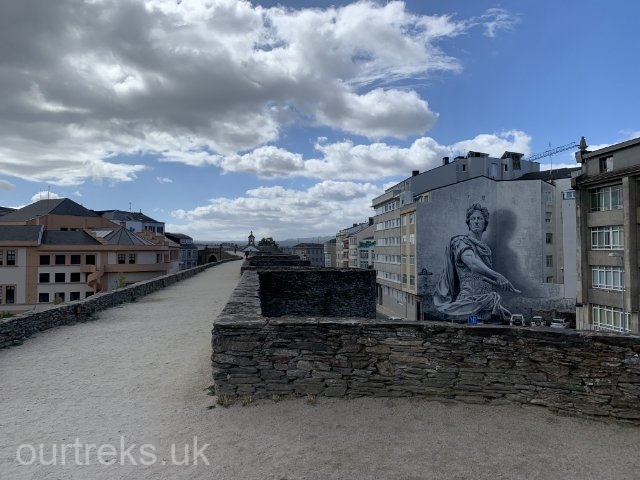
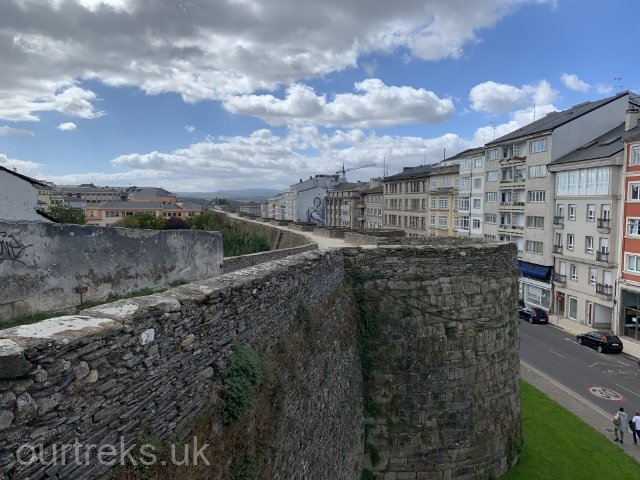
There are two places here plus water and disposal for grey and septic. We park on the car park and have some lunch. Later, we walk through the little park (past a street market just putting everything away) and the 1.4km downhill to the city walls. The 10m high city walls (muralla) date back to 3rd century Roman times, built as a defensive fortification around the old town of Lucus Augusti, they are still largely intact.
The ten gates into the old city of Lugo are impressive, five of them Roman (five added later) with five stairways up to the parapet walkway which is about 4m wide and circumnavigates the old town. Of the original 88 two-story towers 49 are intact and another 39 survive in a partial state. Historically Lugo has been important as a defensive city and as a route for pilgrims who passed through the magnificent Porta Falsa and Porta Miña on their way to Santiago de Compostela.
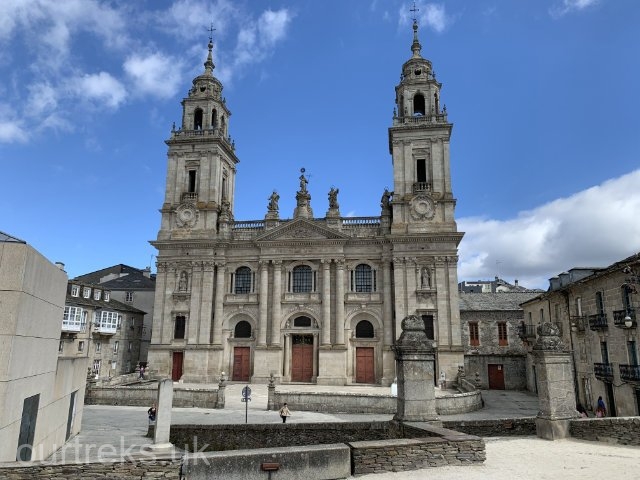
The old town of Lugo inside the walls was a place of contrasts, the old derelict or dilapidated buildings wedged between the refurbished and modernised ones where people lived or worked. They stood side by side, like a row of good teeth showing rotted gaps! The cathedral was in Spanish style but not remarkable and we did not feel it was worth the €6 each to look inside. There seems little else to say about Lugo.
There is nothing in the modern city of Lugo worth visiting. The walls and gates of Lugo are remarkable and worth a visit, not least they stand as a testament to 17 centuries of time and to the Romans who built them. We leave Lugo by Avenida Infanta Elena and take A-6 to Rábade; then LU-111 to Cospeito and the village of A Feira do Monte.
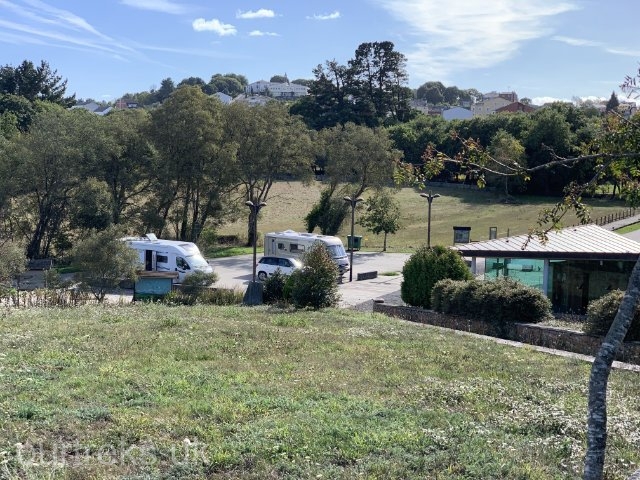
We look for the road to Lagao de Cospeito, a wetland area with an area de Servicio para Autocaravanas next to it but unfortunately take the pedestrian route, under low-growing oak tree branches, while we get through OK, the branches scratch the top and roof of Hymer. We arrive about 5.00pm, there is one other (French) motorhome here and a visitor centre which is closed and locked (and clearly unused for many years) which is a pity as it has a wealth of information on the locality, birds and fragile ecological environment, it also has a toilet!
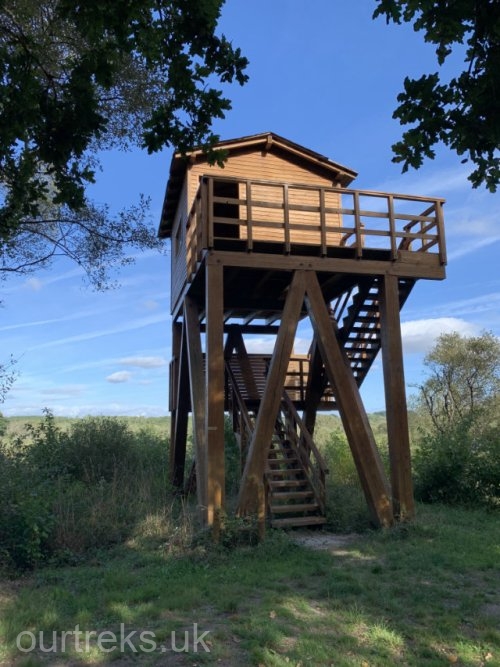
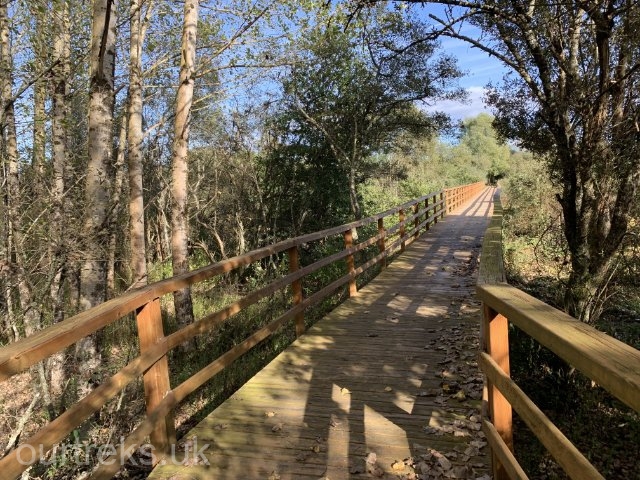
As the evening is sunny and rain is due, we decide to walk around the perimeter footpath of the wetland area. There are four bird hides and a number of wetland ‘lakes’ (lagao). The walk is longer than we think, and there is only one path that goes all around the perimeter of the site, so there is no turning back. It is about 1.4 miles.
hile the hides are excellent there is nothing to see as the lakes and wetlands have dried up, even the bulrushes are dying. We get back to the camper about 6.30pm and have a rest… opening a bottle of cold Spanish cava and enjoy our tray of crevette with it; later paella for tea.
Gallery Santiago de Compostela to Lagoa de Cospeito via Lugo
Click at image to enlarge