Spain and Portugal – Ourol to Las Medulas
Previous day || Back to trip summary page ¦¦ Next day
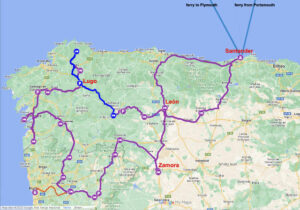
Ourol to Las Medulas
After two nights on the aire at Ourol we breakfast and service Hymer, emptying both toilet and grey water and filling up with fresh water from the tap on our pitch (the connecter needed being the only one we not have. We manage!
We have decided to visit more Roman sites in Northern Spain, two that look interesting are Las Medulas and a villa at Olmeda, close to Astorga. Today our aim is to reach Las Medulas where the Romans extracted huge quantities of gold and changed the landscape in the process.
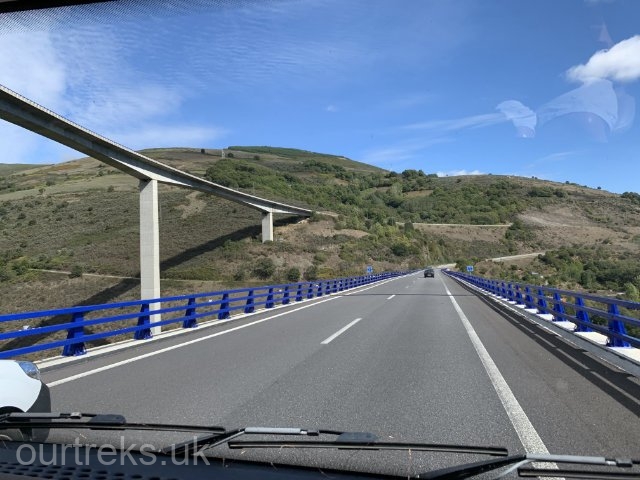
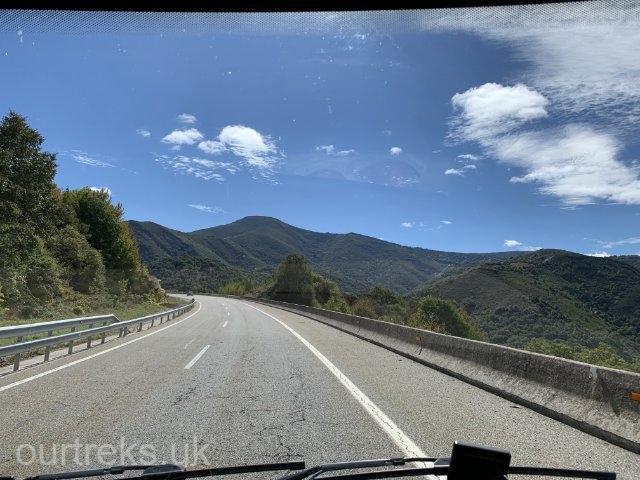
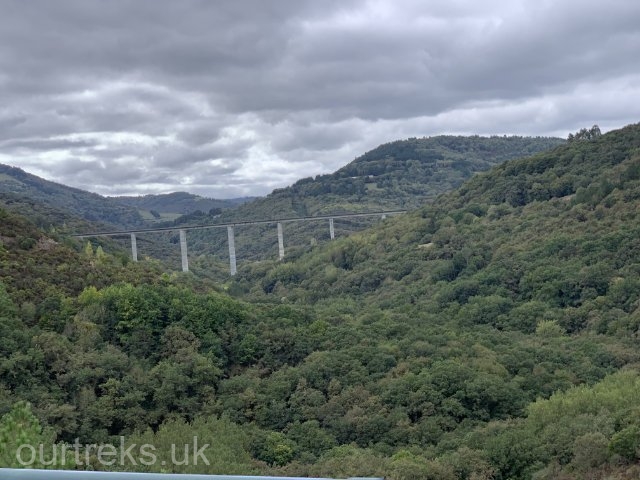
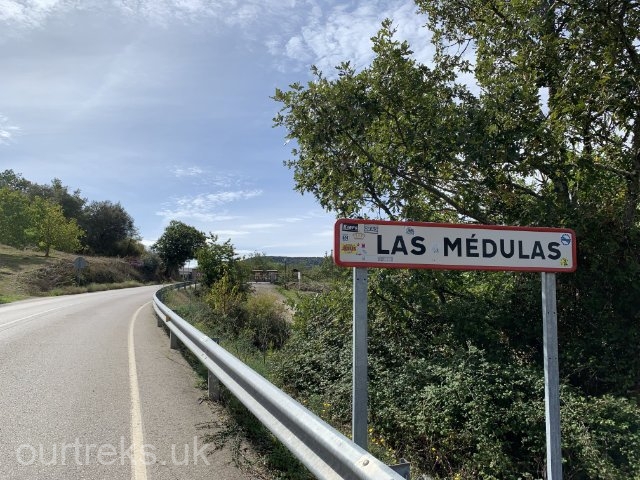
Leaving mid-morning we take the LU-540 from Ourol through Alto da Gañidoira pass at 720m to Cabreiros; the AG-64 to Vilalba; A-8 to Baamonde and Lugo. We take the A-6 south of Lugo and stop on the layby at Area de Descanso Baralla for lunch, it was a functional truck stop. Back on the A-6 to Villafranca and Ponferrada we pass through spectacular high mountains with long viaducts over the valleys at Becerreá at 518m. Taking the N-536 we climb again to Carucedo and to our destination at Las Medulas high up in the mountains.
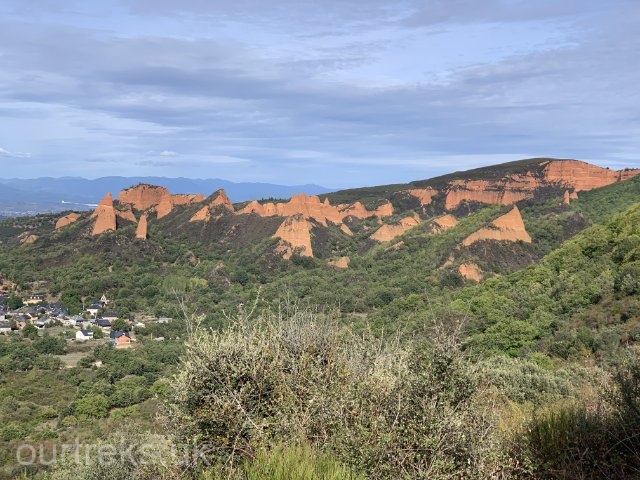
Driving up the hill we parked at the village cemetery car park and walked through the village to the red mountains. These spectacular red rock mountains were much coveted by the Romans in second century who extracted hundreds of kilos of gold by washing away the soft alluvial silt and panning for the gold from the wash water.
The spectacular red landscape that is left resulted from the ruina montium (wrecking of the mountains) a Roman mining technique described by Pliny the Elder in 77AD which used a type of hydraulic mining. This involved undermining a mountain with large quantities of water which was supplied by ‘interbasin transfer’. At least seven long aqueducts tapped the streams of the La Cabrera district where the rainfall is high and at a range of altitudes. These aqueducts took the water and washed it over alluvial gold deposits allowing it to be collected lower down the valley.
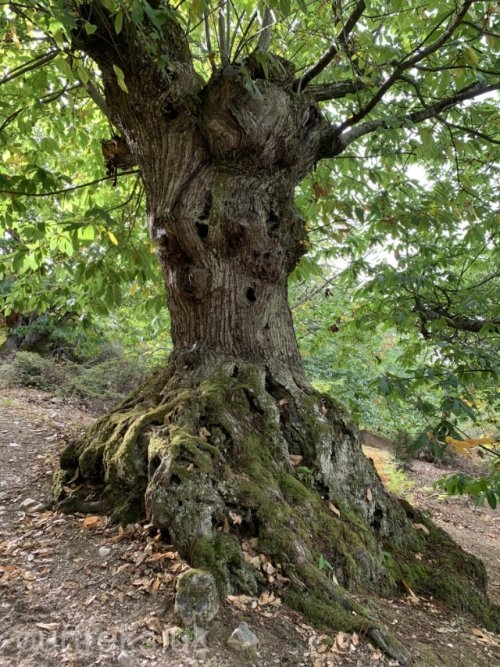
According to Pliny 20,000 Roman pounds (6,560 kg) of gold was extracted each year. It was the most important gold mine in the Roman Empire. It is a modest climb up through ancient olive groves of probably 800 years old where we reach a plateau with a panoramic the view point. Here we ponder on the industrial waste that the Romans washed away to locate the gold.
We spend some time sitting here, it has a lonely atmosphere all of its own, as if with the gold the soul of the mountain was washed away. Later we walk back down the mountain path to the village, calling at the little church of St James and St Jude on the way. The red rock is spectacular in the red of the setting sun as we drink Ancora Alberino wine and a tea of salad with jamon.
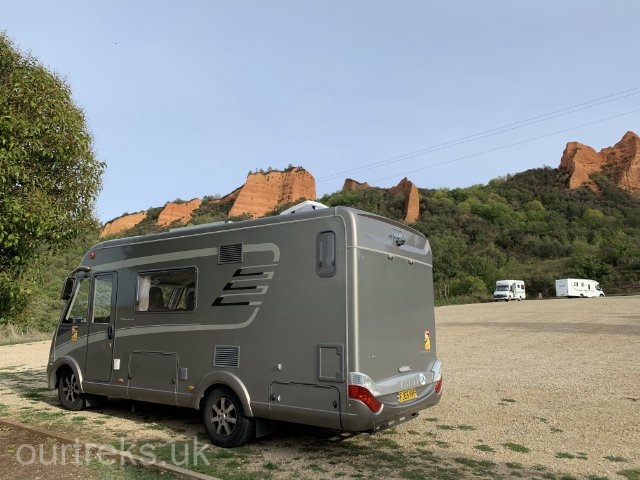
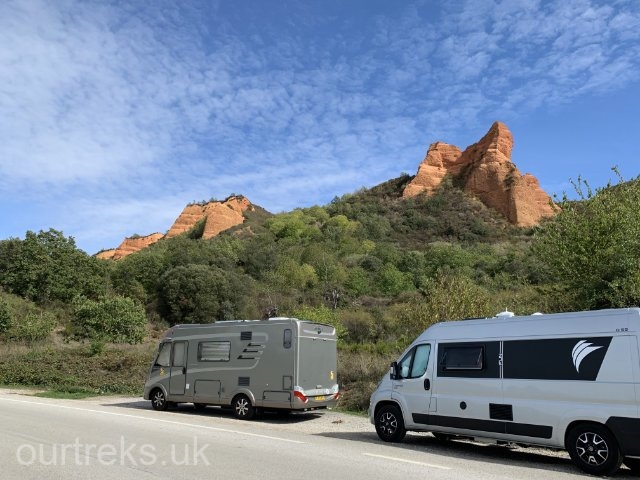
Beneath these majestic red rocks we spend the night at the Las Medulas cemetery with about eight other motor homes.
Gallery Ourol to Las Medulas
Click at image to enlarge