2024 September: France and Spain – Municipal Camping Agüero continued
Previous day || Back to trip summary page || Next day
Day 2 at Agüero. (scroll down for day 3)
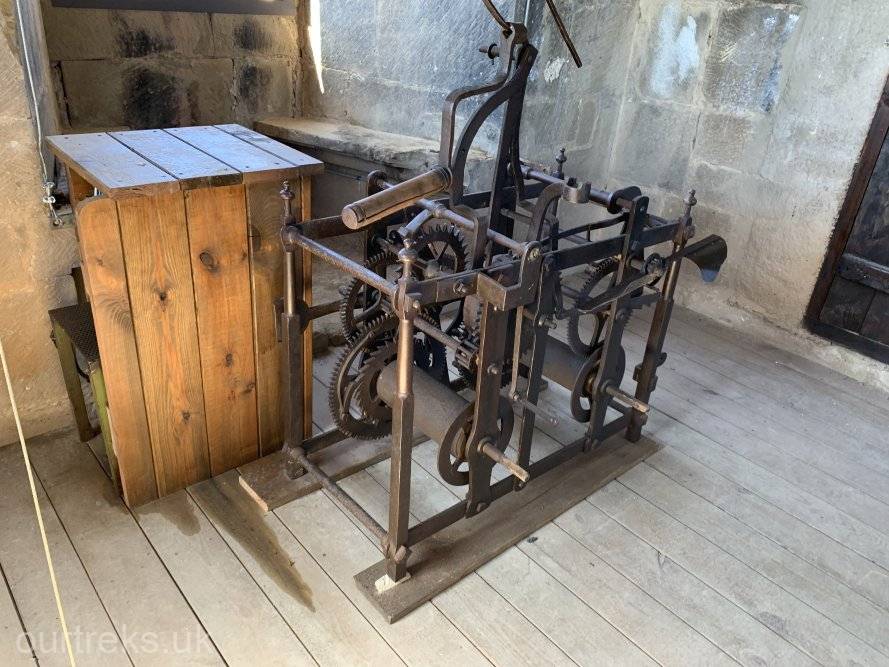
Here at Agüero it is 4°C outside when we wake and we have to remind ourselves that we are in the mountains at 670 metres or 2200 feet. After hot coffee and breakfast we are soon ready to walk the footpath around the Mallos de Agüero. The village clock chimes every half hour (as did all night… we were too tired to notice!).
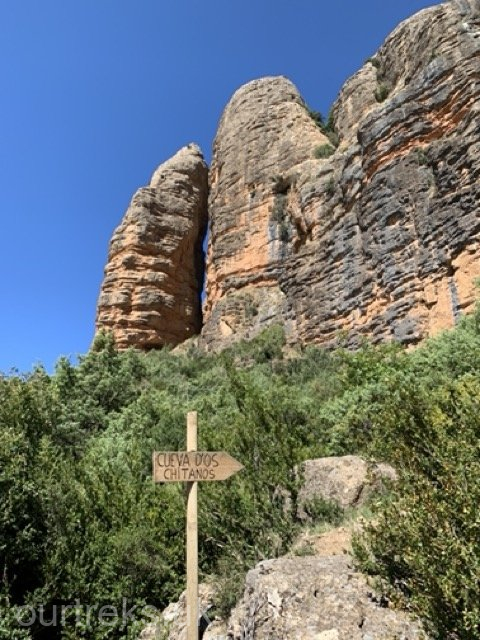
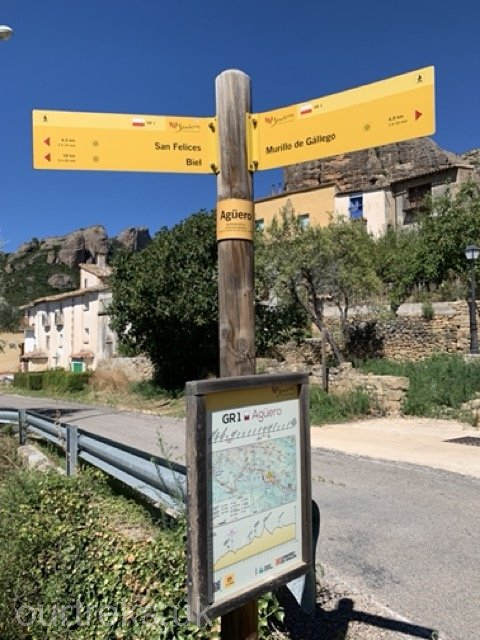
Walking from the campsite up hill (everything seems to be up a steep hill) we cross the ‘main’ road… a single truck width, onto the footpath through the edge of the village to the Mallos. It also is steep and we meet a footpath crossing: left around the Mallos, right to the cave and forward…?
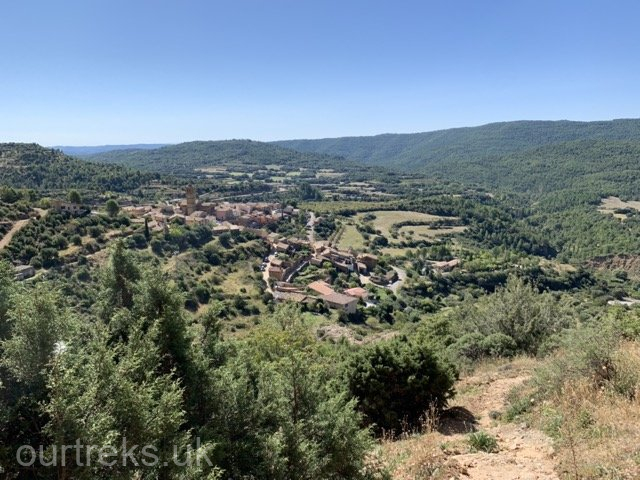
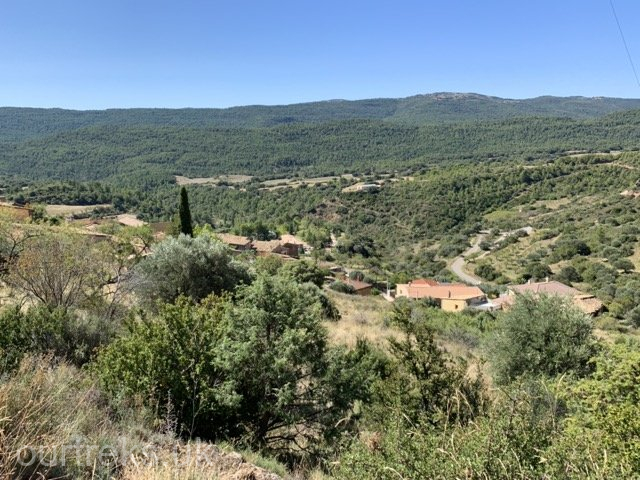
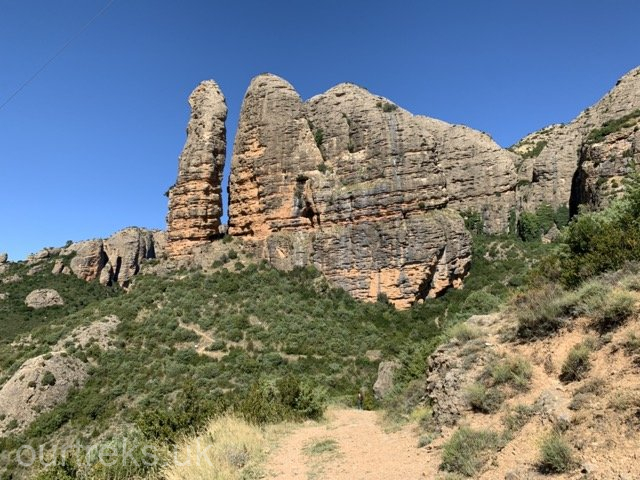
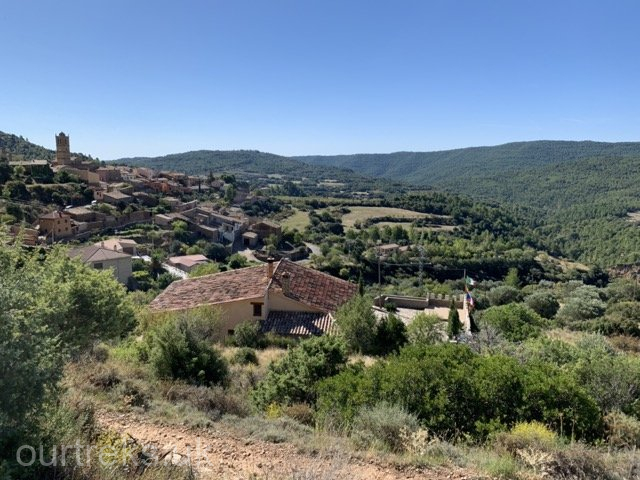
We turn left to walk around the Mallos, it suggests the circular is 2.8km but most of that will be upwards. A longer walk to Villalangua is 11.4km, we take the shorter walkaround the Mallos. The footpath is clear and well-marked but stoney and unstable in some of the steeper parts, you need to take care on these sections. The village is spread out below us with the church tower tall above everything. The griffin vultures are circling lazily above us, soaring on the thermals, what a spectacular sight. The footpath climbs steeply up the side of Pena Sola and along the side of the gorge, which descends steeply down to the river, a slatey-aquamarine in the sunshine.
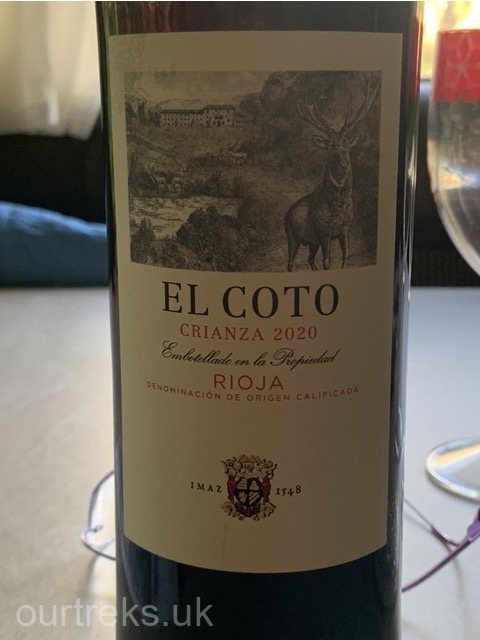
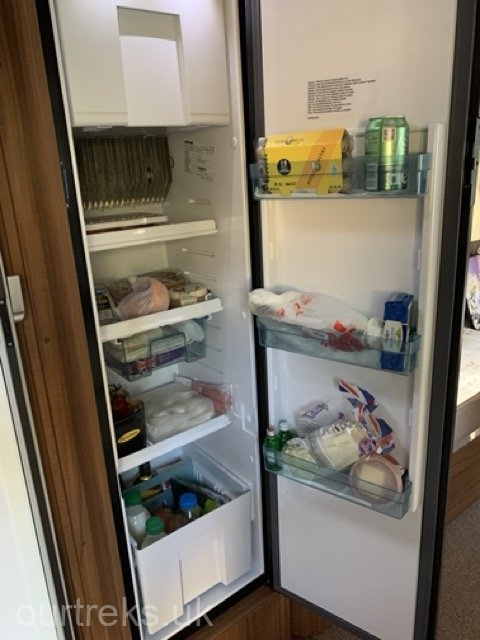
An excellent day out with great views over the surrounding country. We come back to the Hymer admire the fridge that is now packed, just how we like to see it. We eat feta with olives, drink El Coto – a rioja Crianza from 2020, chicken burgers and fresh melon, wonderful food in magnificent surroundings.
Photos from – Agüero hiking around the Mallos de Agüero
click any thumbnail image to enlarge
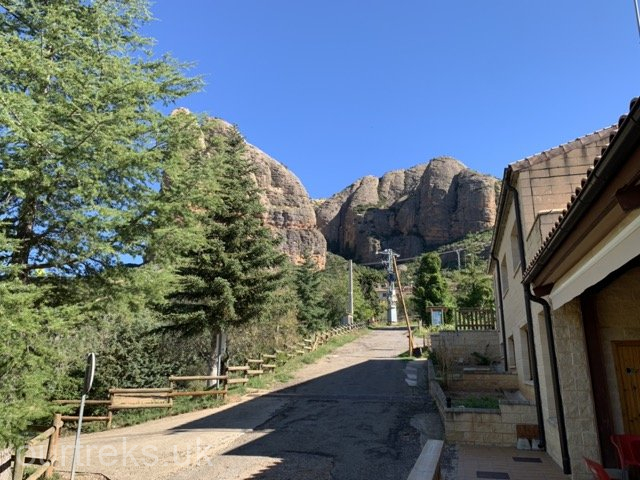
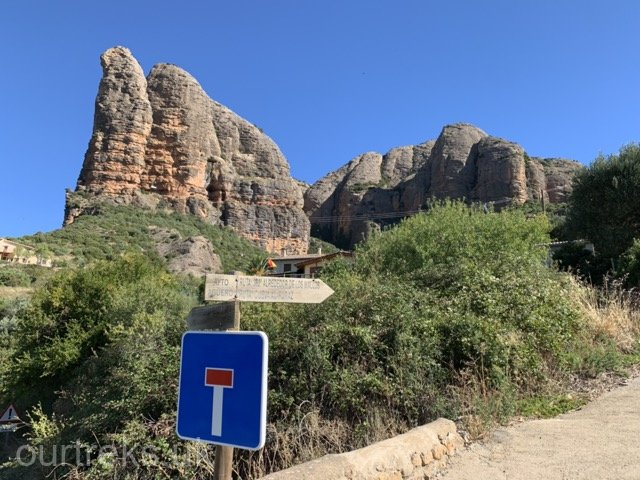
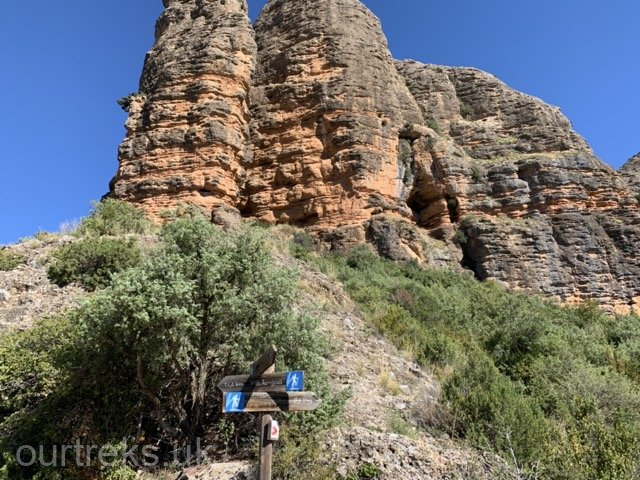

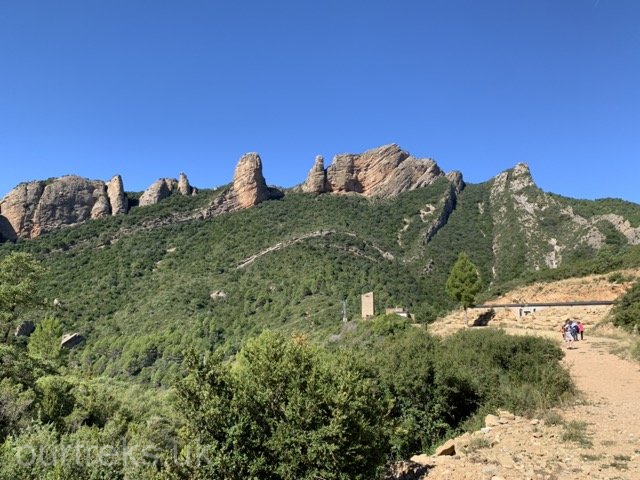
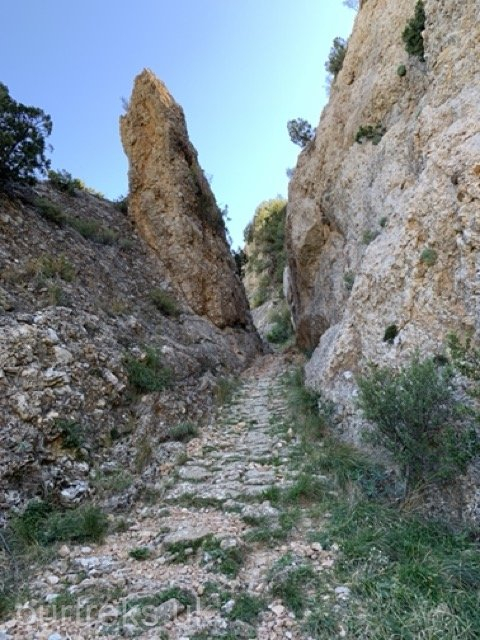
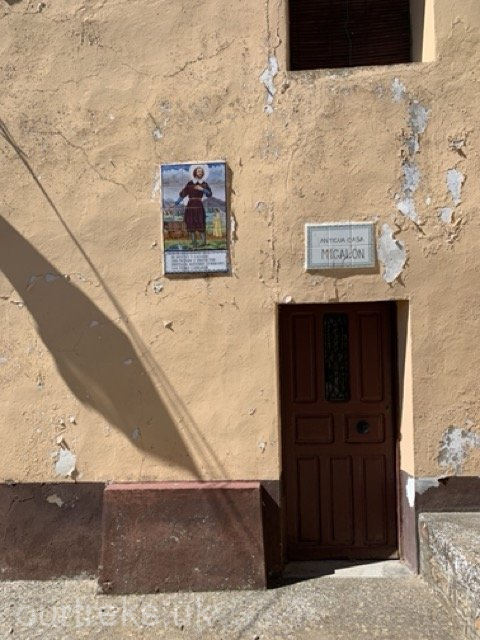
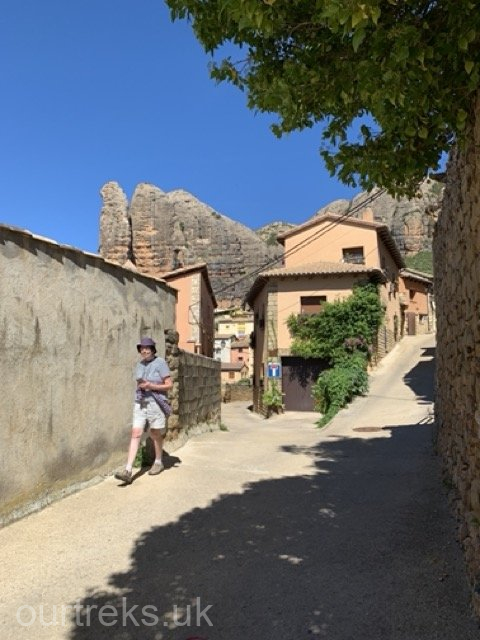

We sleep late, it is warmer this morning… 7°C! Another clear day with a very blue, blue Spanish sky so we are up and breakfast and walk back to the footpaths at the Mallos. We take the left footpath to the base of Peňa Sola, the single column at the left of the Mallos. It is a very steep climb and hot as it faces south. We needed to take care as the small stones were unstable in places and nothing to hold except the spiney trees. When we reach the top we find, disappointingly that there is no path around the base just dense spikey vegetation of juniper and eryngium (sea holly), both very unpleasant if you get stabbed!
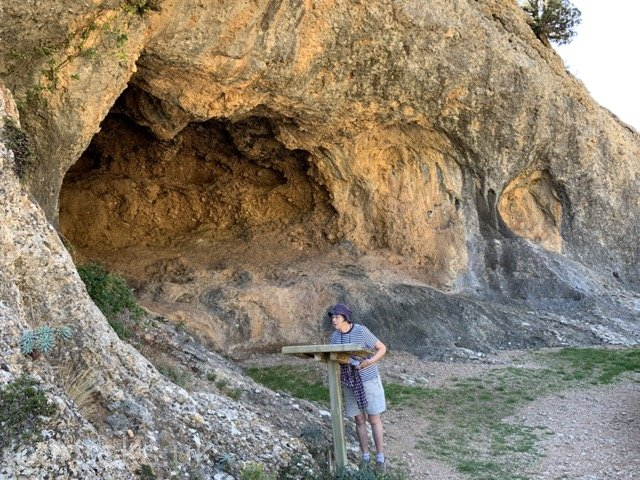
We sit and appreciate the view of the village and the campsite. After a short rest the only way is down… carefully! At the lower footpath we follow it around to the right and take the path towards the cave, Cueva de Foz. Another steep and upward climb towards the base of the Mallos, with some unstable parts across the stoney scree. Upwards to the base, again with no footpath continuation around the base.
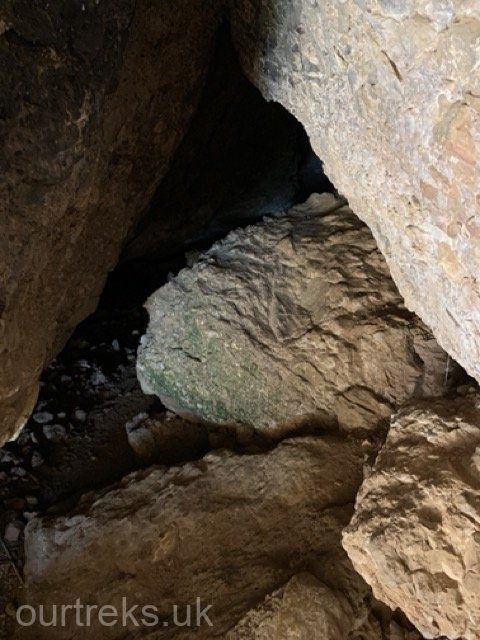
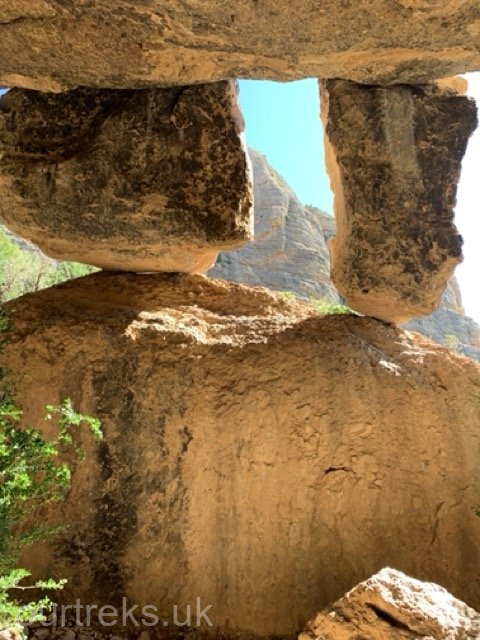
The cave is remarkable, fairly shallow but the ‘roof’ appears to be propped up by two gigantic boulders which must have tumbled down some hundreds of years ago. It rather looks like a roof with a ‘skylight’ through the ‘windows’ between the gaps in the boulders. Bizarrely there are aircraft flying across the ‘gaps’ leaving their silvery condensation trails across the blue, blue sky. They are accompanied by pairs of griffin vultures as if their chaperones. We sit in peace and enjoy the view, a couple of other climbers coming to join us but did not stay. Again the only way is down… carefully!
At the bottom we turn right towards the village and follow the footpath to the trailhead where there is a small car park, already full with cars. Some climbers on the rock face, some hiking the trails, we follow the footpath down through the village, very steep streets many with steps, especially at the hairpin corners. At the Eglise we try again to enter (it is Sunday) but again the door is locked.
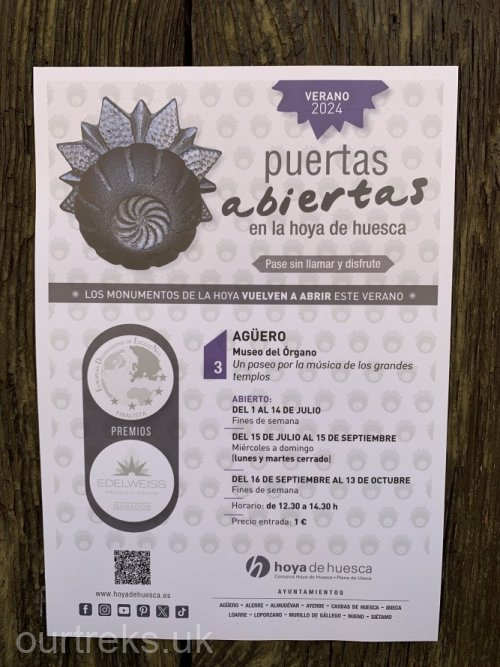
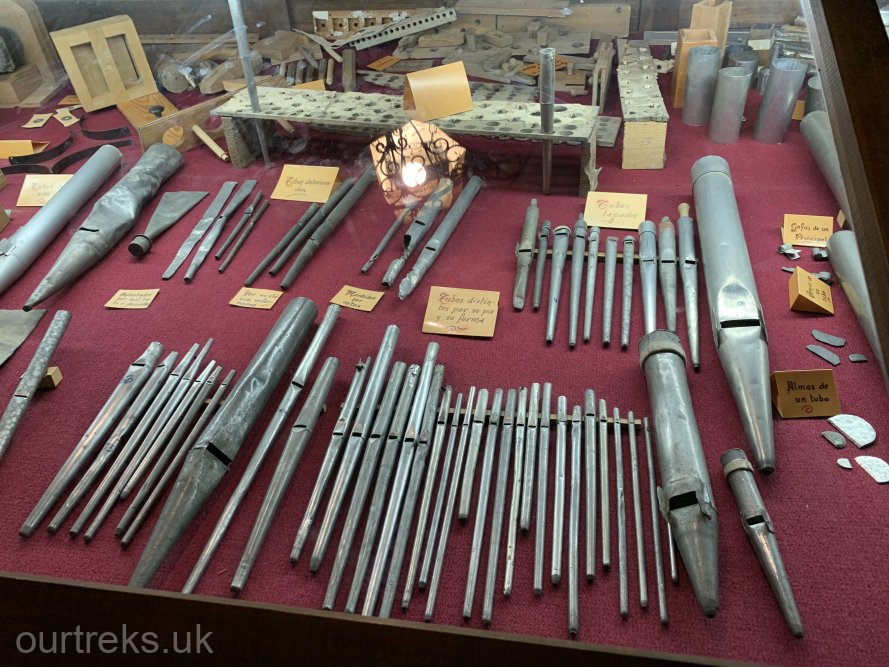
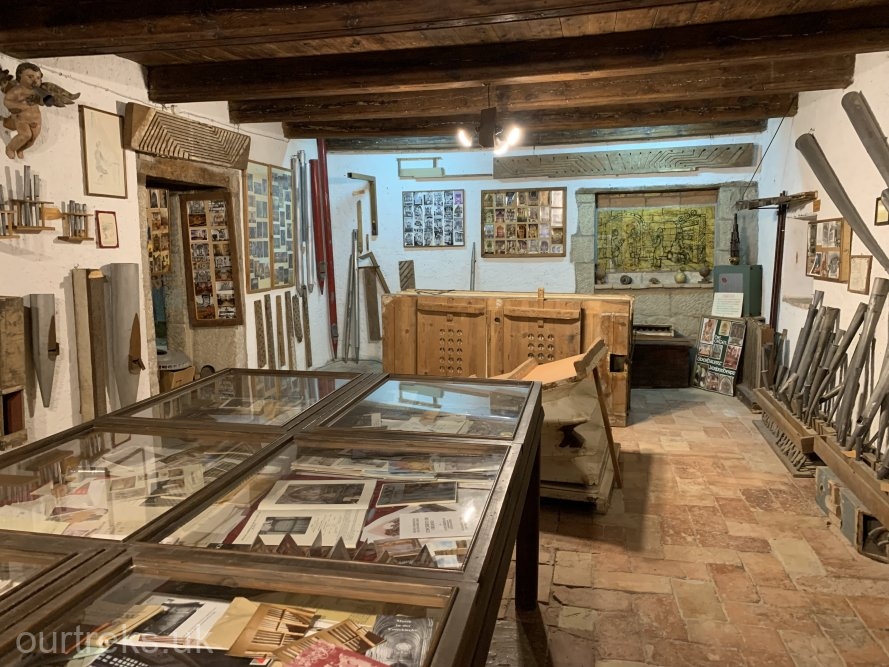
Walking across the road we discover a small wall plaque for the Museo de Organo, organ museum, cost €1! Intrigued we enter and find a tour in progress which we join. It was the home of the priest Luis Galindo Bisquer whose passion was to rescue and repair church organs. He was the priest of the Church of El Salvador until his death in 2010 and established the museum so that others could benefit from his lifetime of work.
Our guide, a young man of the Puebla who remembers the priest from his childhood, is very well informed and provides a super guided tour… in Spanish. Fortunately for us, the woman of the other couple taking the tour was a Spanish English teacher. We had a fascinating three-way discussion of Spanish and English words for organ pipes, bellows, keys (of the keyboard), log tables and slide rules (used to calculate mathematic formulae for sizes/volumes of pipes.
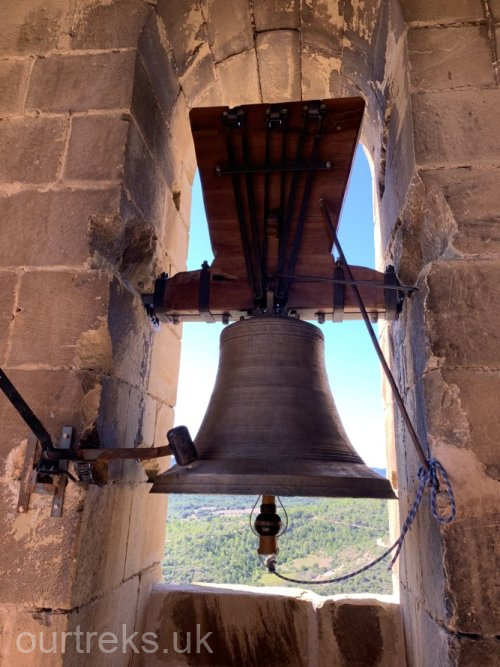
We go over to the church and look at Galindo Bisquer organ in his church, a Romano-baroque Roman Catholic building, including a visit to the crypt. As an optional extra he took the four of up the church bell tower, where the chiming bells are housed, in remarkably good condition.
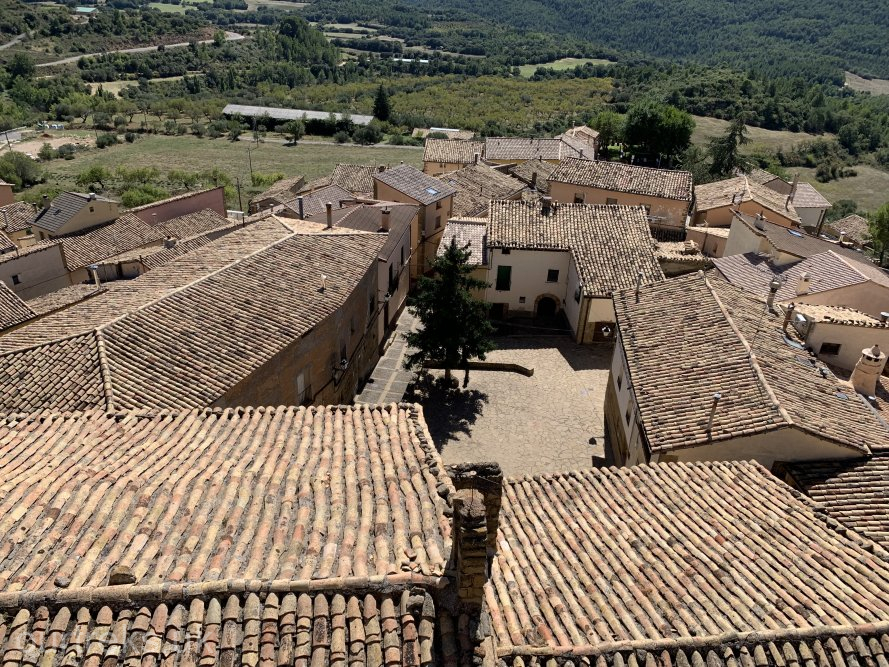
The views over the Mallos and village were fantastic, but we had to draw ourselves away as our guide pointed out that in 3 minutes the bell would strike the 3.00pm hour (three chimes). We didn’t have to leave but we all four decided, for the good of our ears it might be a good idea. We stopped below on the half-way platform and listened to the suck of air and the strike, a super experience.
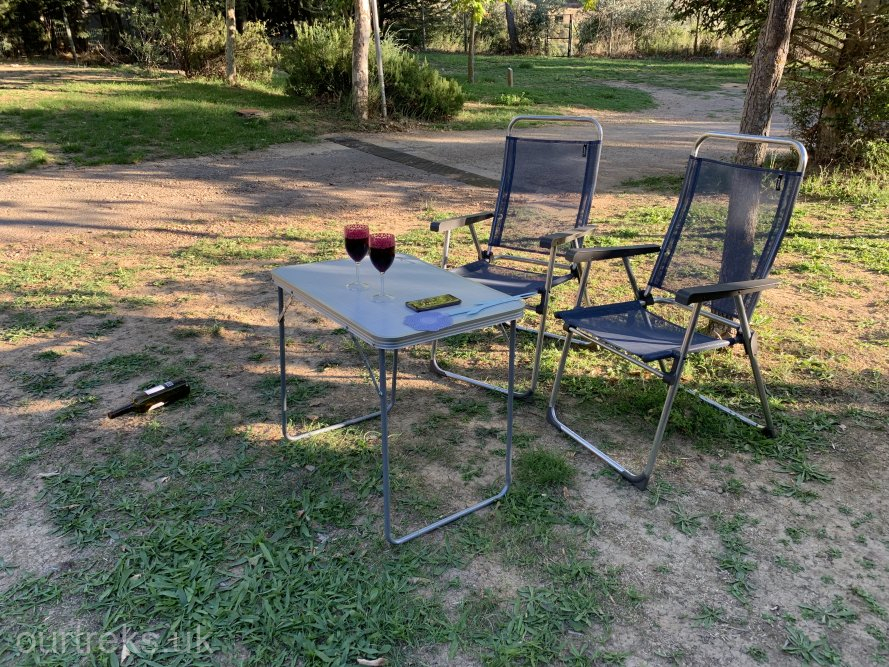
Back at Hymer we rest up in the shade after our hikes and the heat of the day. Later we open lovely Tempranillo wine and enjoy the warm evening, reminding ourselves that back in England it is likely to be too cold to sit out when we are back.