2019-08-01 Caen Memorial to Bayeux
Previous Day :: Trek Overview :: Next Day
Caen Memorial to Bayeux
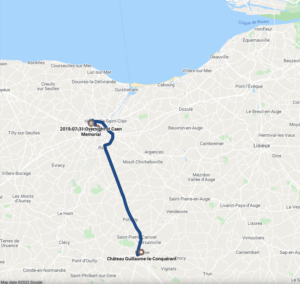
Our route Caen Memorial to Bayeux
Another warm day when we wake on the motorhome aire at the Caen Memorial; we breakfast and walk to the Museum of Caen to see what is here. It is remarkable. There are reconstructions of everything including a WWII underground bunker (accessed by a lift) used as Germans headquarters during the occupation of Caen. There is an aircraft hung from the ceiling in the main hall and exhibitions of just about anything to do with WWII. A family could spend a whole day here, there is so much to see.
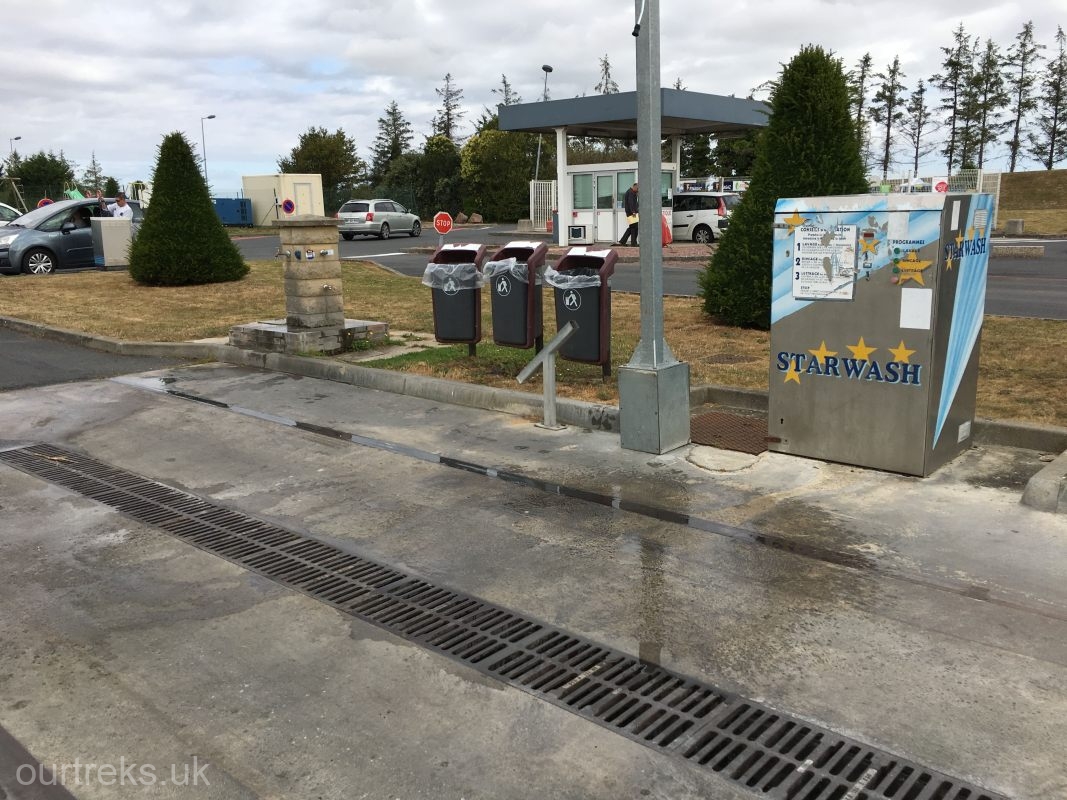
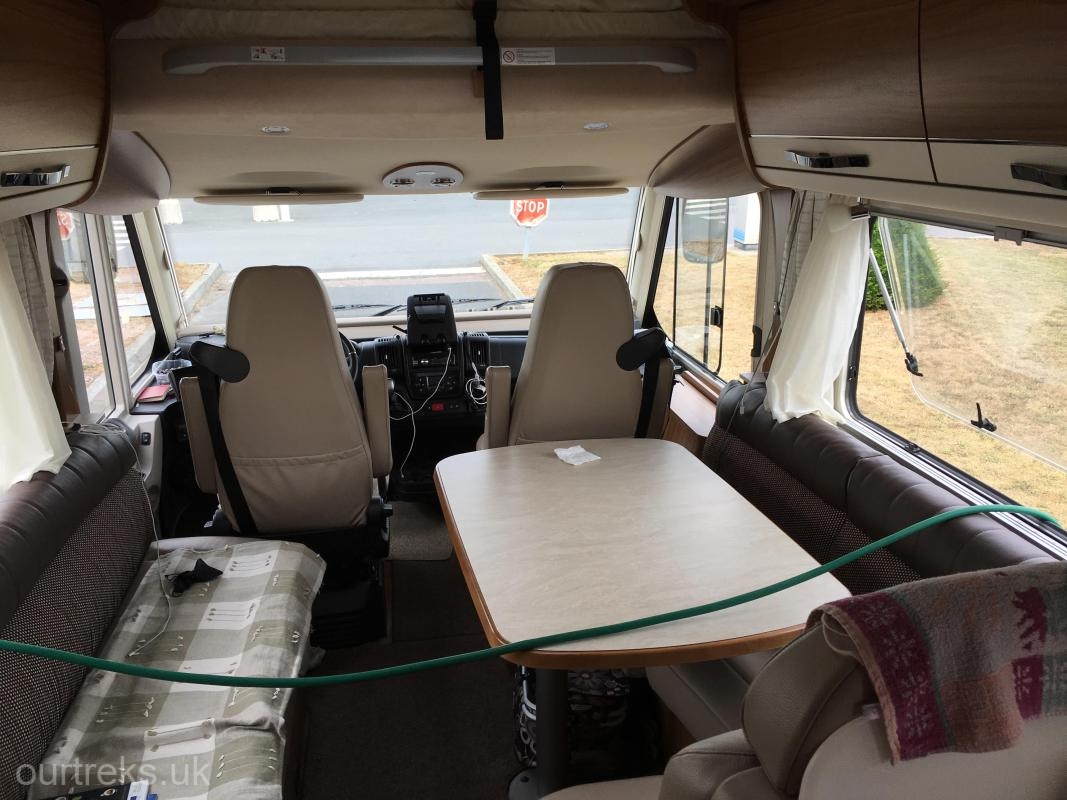
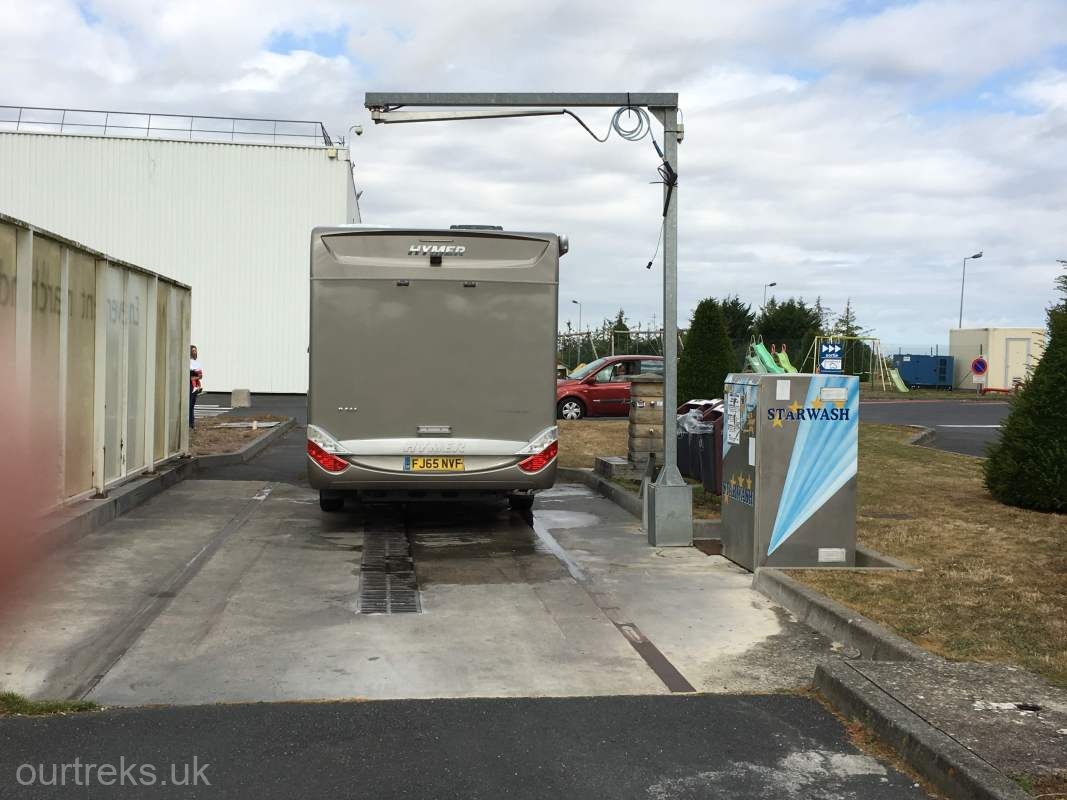
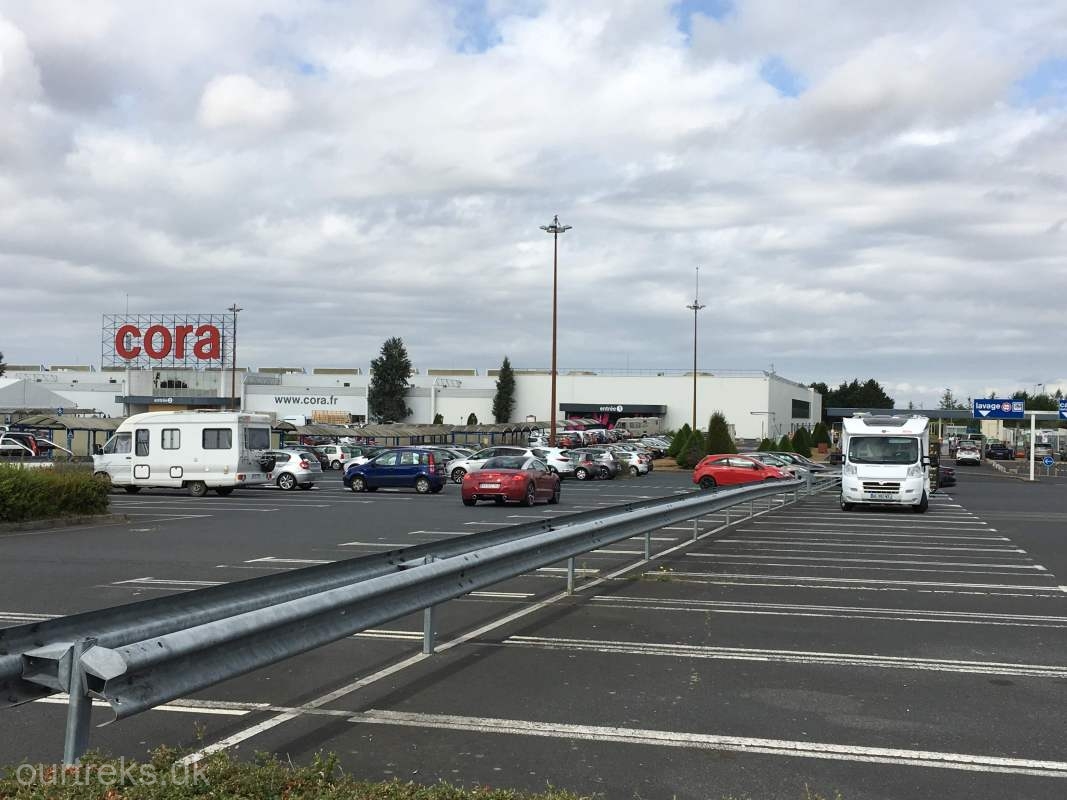
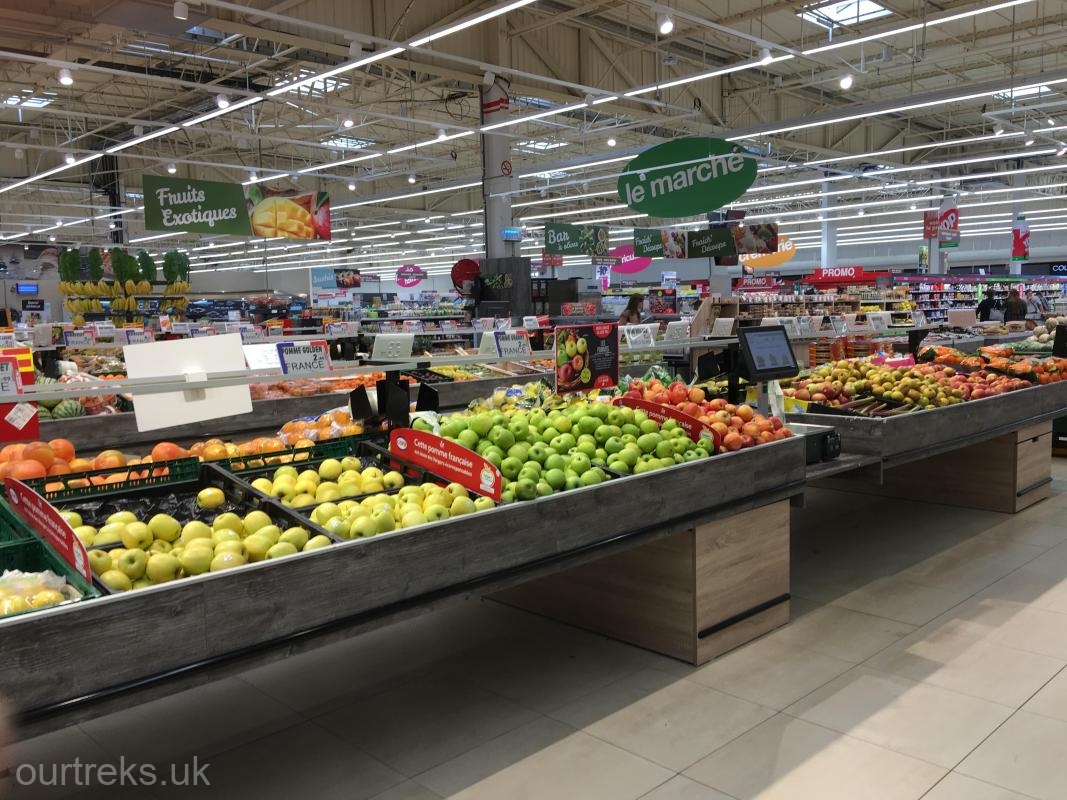
We decide to move on to Bayeux, but first drive 5 minutes up the road to Cora supermarket (at a place called Rots) where there is a good vidage (cassette emptying point) to service the camper, fill with water and with diesel. We also call in the supermarket for supplies of cheese, jambon, fruit and vegetables and wine, we decide it is expensive (and more akin to Waitrose than Asda!). The motorhome service point is a former car wash, very effective as a facility for motorhomes. The water tap is on the wrong side of our Hymer for filling, and there is a one-way flow of traffic, so we passed the hose pipe through open windows. (See photos).
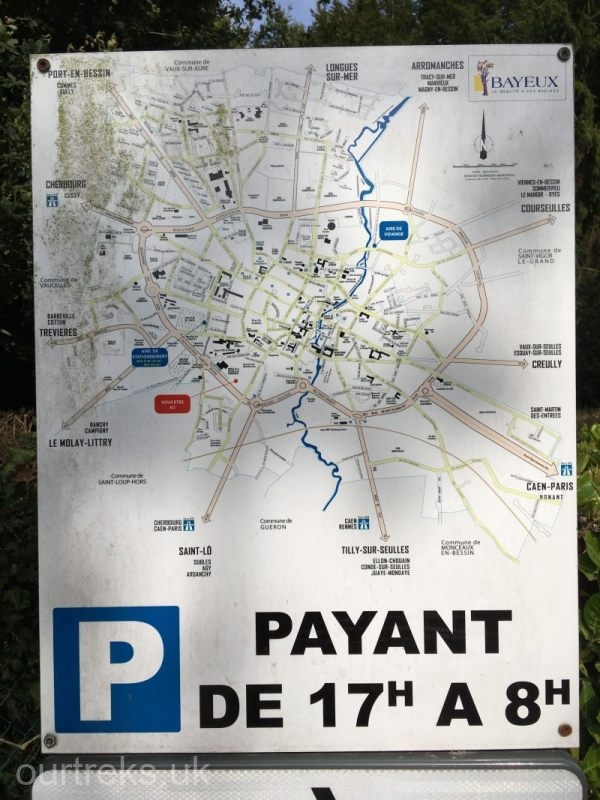
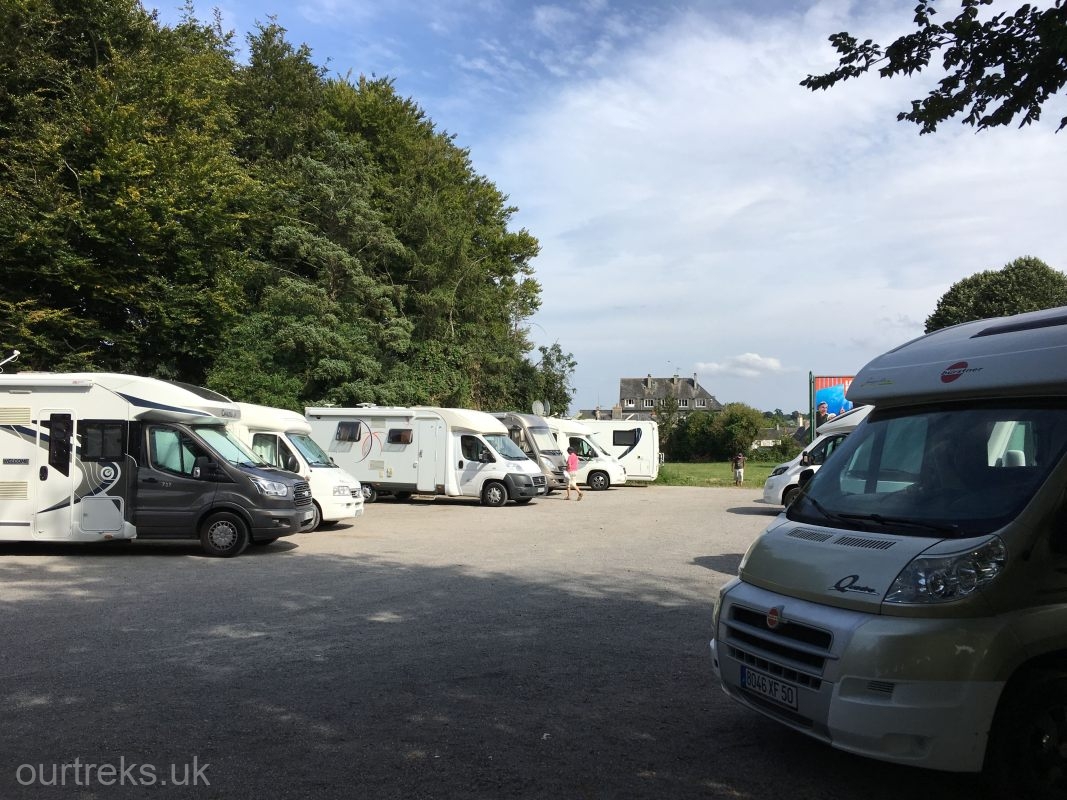
We take the N13 from Caen to Bayeux, only about 20km and then D613 towards the town itself. We find the Battle of Normandy (1944) Museum in the early afternoon. Here there is a small Aire for about 16 campers next to the museum car park. There is free motorhome parking in the day for the museum and €4 for an overnight stop (and a toilet outside the museum so accessible 24 hours).
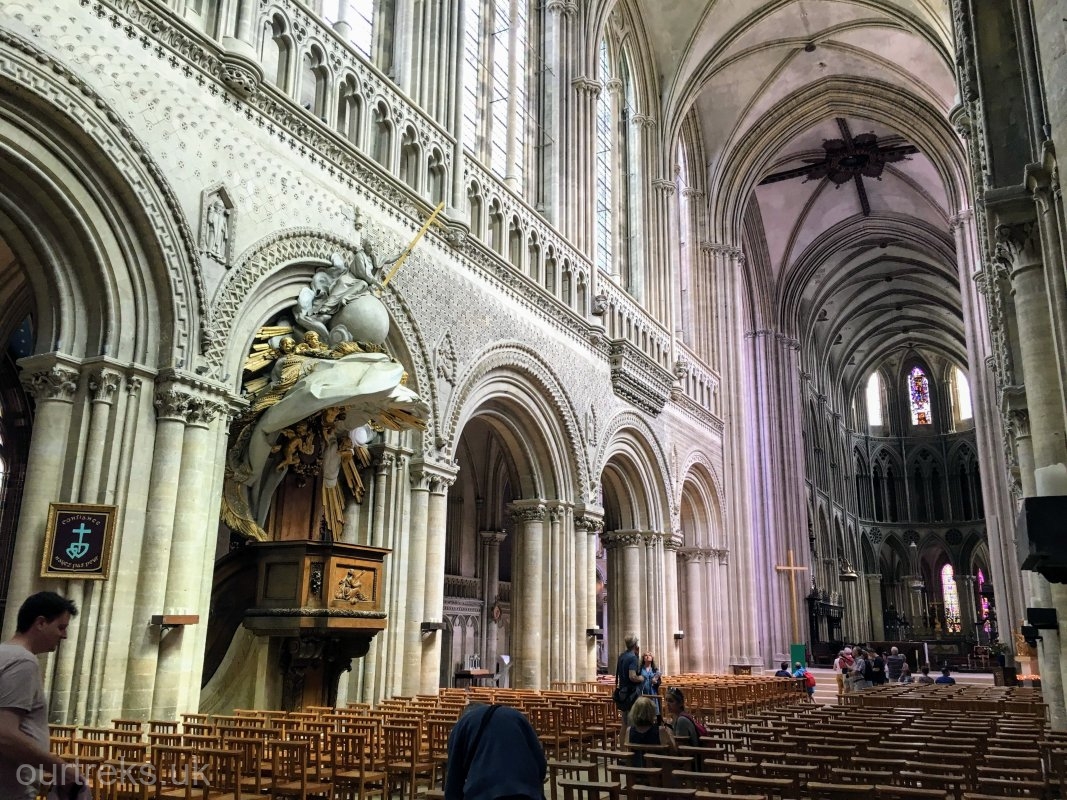
We park up and have lunch, it feels hot although it is [only] 27°C, but we are in full sun. It is a short walk of about 1km to the centre of Bayeux. We call in at the La Cathedral Notre-Dame de Bayeux, an impressive 11 century gothic building, built in the style of ‘Norman gothic art’, one of the many supported and funded by William. It is well worth a visit to see the tall columns on two levels, stone vaulted ceiling and magnificent pulpit covered by a monstrosity of golden sun rays and cherubs! From the cathedral we wander through the pedestrian area to the Abbey (which houses the tapestry). It is now just after 3.00pm and fairly busy, we could wait till later, but decide to go in anyway. The gallery holding the tapestry is long and in subdued light, to be viewed using the audio narrating a description of each scene on the tapestry. The only problem is that once the audio is running it is a constant narrative of the tapestry events without the option of pausing it. Alan says that when it is busy it will keep the crowd flowing through at a constant rate and avoid bottlenecks… that would make sense. We follow the events of the tapestry at the rate the audio dictates. When we are near the end we doubled back so that we could view it all again.
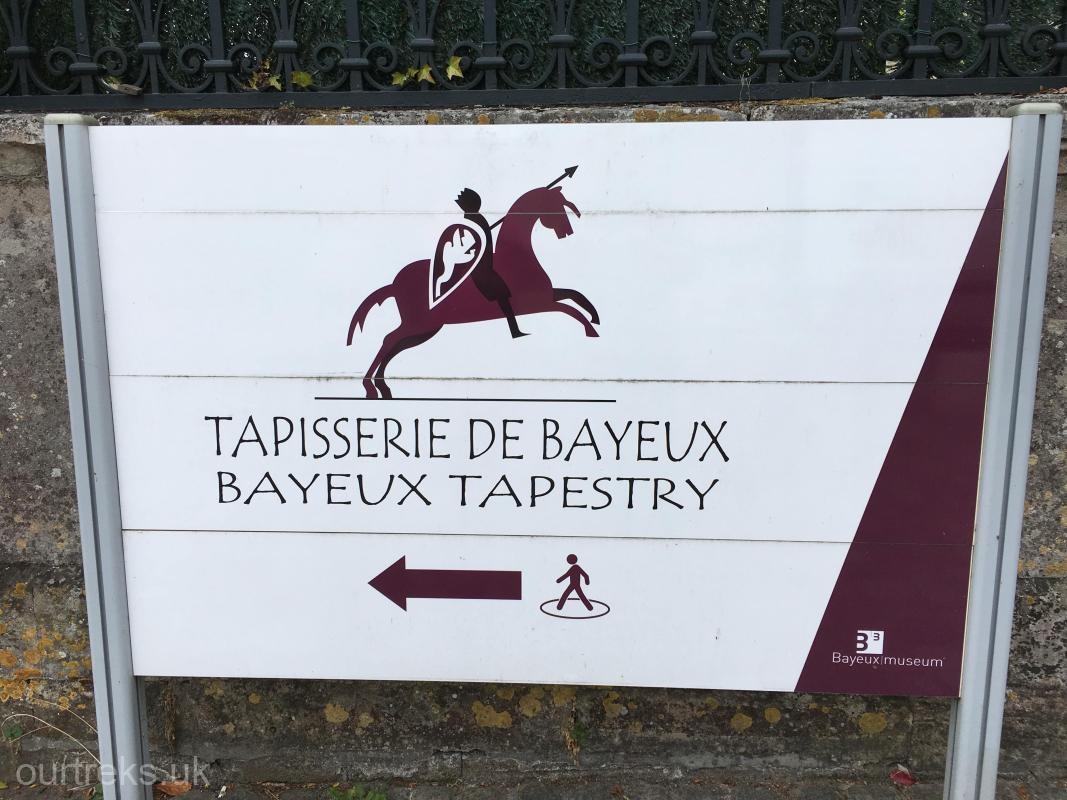
No photos are allowed inside the buildings so all we can show is the sign.
The tapestry at Bayeux
Begins with the naming of William of Normandy as heir to the English throne by King Edward the Confessor (Edward was childless and William was a distant cousin), and Harold’s trip to Normandy to inform William of this. Edward dies, the English Barons revolt against a French/Norman as their next king and crown Harold Godwinson as King of England instead. William hears of this (the tapestry shows the news imparted in a scene of a whispered conversation). There follow several charming scenes of an armada of boat building from hewing down trees, making wood planks and building boats. Next the details of loading the boats with chain mail, weapons, armour, food and horses to support a huge army. He sails to England in September 1066, crossing the channel to Pevensey on a favourable wind, while Harold has to March 200 miles south from Stamford Bridge near York, having successfully fought off a Norwegian invasion and defeated Harald Hardrada. The battle at Hastings is graphically depicted with slaughter on both sides but the eventual success by William after 14 hours of battle.
The 59 scenes of the tapestry take about 20 – 30 minutes to walk past, a little too quick for us so we walk back to the beginning and do it all again. This time we look at the detail of the embroidery (embroidery on fine linen cloth is what it is and not tapestry which is wool on canvas), taking particular note of the different embroidery stitching, the thread, the colours used. I think of my mother and how she would have appreciated the fine art of the stitching. It is in remarkably condition, including the linen cloth, even after 1000 years. It really is a remarkable piece of history. We wander back through the town thinking about and discussing the events of and the making of the tapestry and the impact of the history that it depicts.
Caen Memorial to Bayeux
Click any photo to enlarge.

Summary of motorhome journey through Germany and France
| miles today | mpg | average speed |
hours driven |
| 19.2 | 27.4 | 18 | 1:02 |